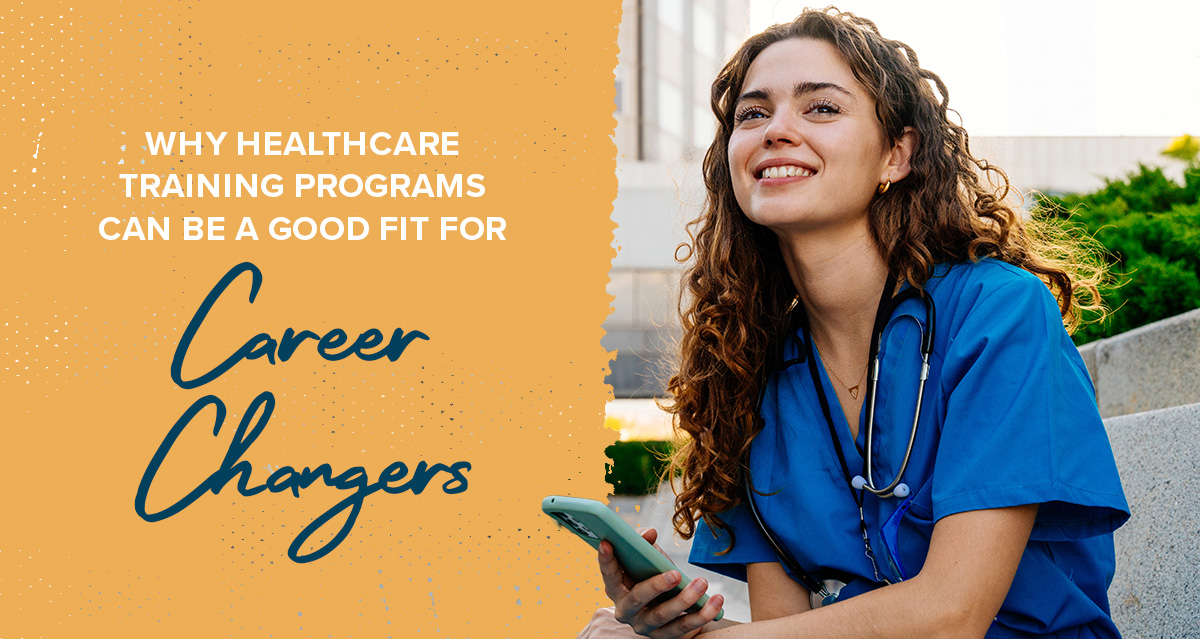
Why Healthcare Training Programs Can Be a Good Fit for Career Changers
Changing careers is a significant decision, especially if you have spent years building experience in another industry. Whether you are looking for greater job stability, new professional opportunities, or work that aligns with your personal goals, taking the next step often begins with learning new skills.
Healthcare is an appealing option for many adults because it offers career-focused education in a variety of clinical and administrative fields. While the technical knowledge may be new, many of the skills you have already developed, such as communication, organization, teamwork, and problem-solving, can support your transition into healthcare.
If you are considering a career change, understanding how your previous experience connects to healthcare training can help you identify a program that fits your interests and long-term goals.
Aligning Your Background with Healthcare Training
Changing careers does not necessarily mean starting over. Many adults discover that the skills they developed in previous jobs translate well into healthcare settings, even if they have never worked in the field before. The examples below illustrate how previous workplace skills may support different healthcare training paths, although the right program will depend on your interests, goals, and qualifications.
| Previous Background | Transferable Skill Set | Potential Healthcare Pathway |
| Customer Service & Retail | Communication, empathy, multitasking, problem-solving | Medical Assisting: Support patients during appointments, assist with clinical procedures, and help coordinate day-to-day office operations. |
| Administrative & Office Support | Organization, accuracy, data entry, attention to detail | Coding & Billing for Electronic Medical Records: Manage medical documentation, coding, insurance claims, and electronic health records. |
| Hospitality & Food Service | Teamwork, adaptability, communication, following established procedures | Practical Nursing (PN): Build the clinical knowledge and hands-on skills needed to provide direct patient care in a variety of healthcare settings. |
1. Career-Focused Training Designed for Adult Learners
One of the biggest concerns for career changers is how long it will take to prepare for a new profession. Returning to a traditional four-year college is not always practical when balancing work, family, and other responsibilities.
Many healthcare training programs are designed to provide focused instruction that prepares students for a specific career path. Rather than taking a broad academic approach, programs such as Medical Assisting, Practical Nursing, and Coding and Billing for Electronic Medical Records emphasize the technical knowledge, professional skills, and supporting coursework associated with each field.
This focused approach allows students to spend more time learning skills that are relevant to their chosen profession while progressing toward their educational goals.
2. Flexible Learning Options for Busy Adults
Returning to school often means balancing coursework with work schedules, family responsibilities, and other commitments. Flexible learning formats can make continuing your education more manageable.
Daytona College offers healthcare programs in a variety of formats to help meet the needs of adult learners.
Hybrid Programs
Medical Assisting Diploma and Associate of Occupational Science (AOS) degree programs combine online coursework with scheduled on-campus lab sessions. Students complete lecture-based assignments online while developing hands-on clinical skills during in-person training.
Online Programs
The Coding and Billing for Electronic Medical Records program is offered online, allowing eligible students to complete coursework from a location that works best for them while following program requirements and deadlines.
| Program Format | What to Expect | Benefits for Adult Learners |
| Hybrid | Online coursework combined with scheduled campus labs | Provides scheduling flexibility while maintaining hands-on clinical training. |
| Online | Coursework completed through an online learning platform | Offers greater flexibility for students balancing work and personal responsibilities. |
3. Hands-On Training Helps You Prepare for Real-World Settings
Beginning a new career can feel intimidating, especially if you have never worked in a healthcare environment. Practical training allows students to develop technical skills before entering clinical or professional settings.
Medical Assisting students practice procedures such as measuring vital signs, performing electrocardiograms (EKGs), collecting laboratory specimens, and assisting with patient care in structured lab environments under instructor guidance.
Students enrolled in Coding and Billing for Electronic Medical Records programs develop experience using electronic medical record systems while learning documentation, coding, and insurance billing processes commonly used in healthcare offices.
Practicing these skills in a structured educational setting allows students to apply classroom concepts while becoming familiar with the tools and responsibilities they may encounter in their future careers.
4. Your Existing Professional Skills Still Matter
Technical training is only one part of preparing for a healthcare career. Employers also value the professional skills many career changers already possess.
Experience gained in customer service, business, hospitality, retail, or administrative positions often helps students adapt to healthcare environments because they are already familiar with working with people, staying organized, and managing competing priorities.
Examples of transferable skills include:
- Communication and active listening to interact respectfully with patients, coworkers, and healthcare providers.
- Attention to detail when documenting patient information or processing medical records and insurance claims.
- Time management to balance multiple responsibilities in fast-paced healthcare settings.
- Teamwork and professionalism when collaborating with others to support quality patient care.
Combining these established workplace skills with career-focused healthcare training creates a strong foundation for entering a new profession.
Supporting Adult Learners at Daytona College
Making a career change is a major decision, but choosing the right educational environment can make the process feel more manageable.
Daytona College offers healthcare programs designed for adults who are preparing for a new career path. Whether you choose a hybrid Medical Assisting program, an online Coding and Billing program, or Practical Nursing training, you can learn in an environment that emphasizes career-focused instruction and practical skill development.
If you are unsure which healthcare pathway best matches your interests, speaking with an admissions representative can help you compare programs, understand available learning formats, and determine the next steps based on your goals.
Frequently Asked Questions
Do I need healthcare experience before enrolling?
No. Many entry-level healthcare programs are designed for students with little or no previous medical experience. Coursework introduces foundational concepts, terminology, and technical skills as students progress through the program.
How do hybrid healthcare programs work?
Hybrid programs combine online coursework with scheduled on-campus labs. Students complete lectures and assignments online while attending campus to develop hands-on clinical skills through supervised instruction.
Can I attend school while working or caring for my family?
Many adult learners continue to balance work and personal responsibilities while enrolled in school. Choosing a program with online or hybrid coursework may provide additional scheduling flexibility depending on your individual circumstances.
How do I choose the healthcare program that is right for me?
Think about the type of work you enjoy. If you like interacting directly with people and providing patient support, Medical Assisting or Practical Nursing may be worth exploring. If you enjoy organization, technology, and working with detailed information, Coding and Billing for Electronic Medical Records may be a good fit.
Take the Next Step in Your New Career
Changing careers can feel like a big step, but the right education can help you prepare for new opportunities. If you are interested in learning more about Daytona College’s healthcare programs, request information to explore available training options, compare program formats, and discuss your educational goals with an admissions representative.